

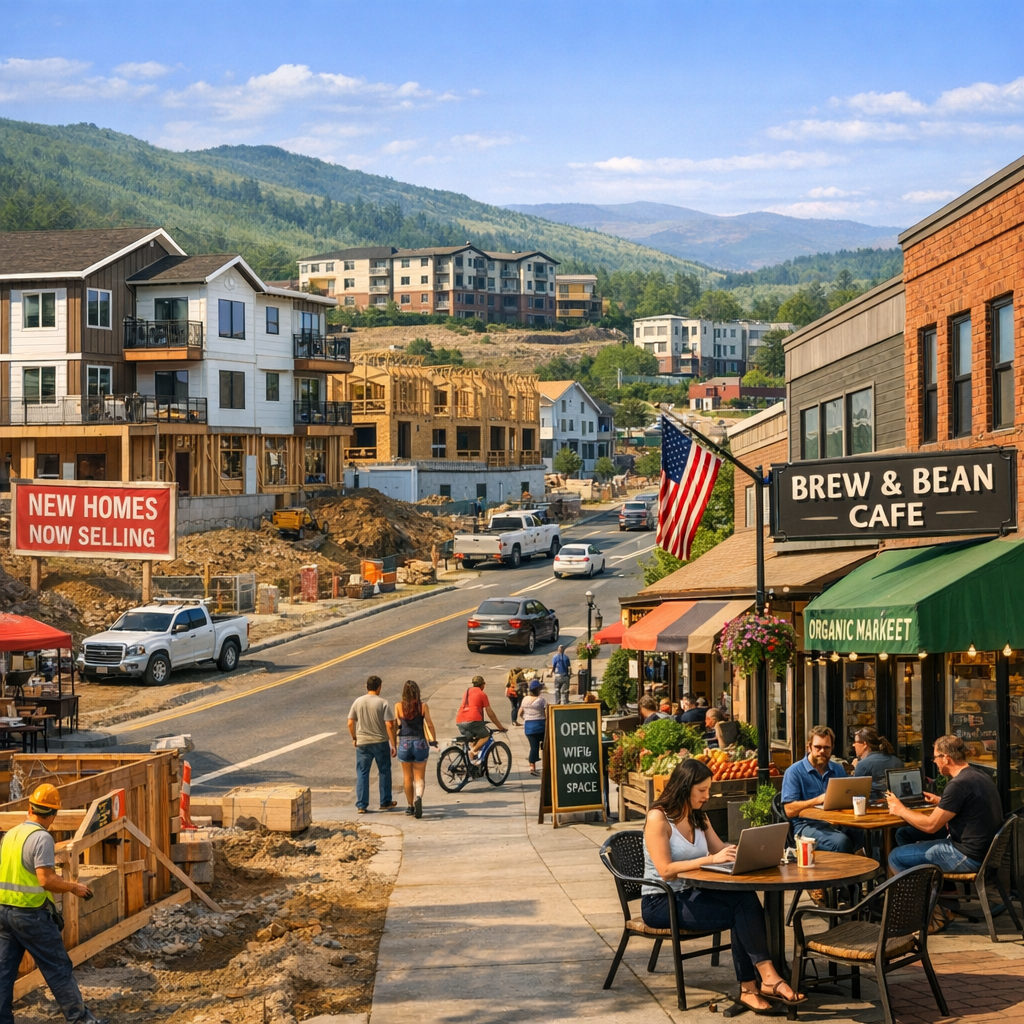
In recent years, small towns across the United States have experienced significant transformations due to global events. These changes offer valuable lessons for communities like Cañon City, Colorado, as they navigate the evolving landscape.
The Rise of ‘Zoom Towns’
The COVID-19 pandemic accelerated the adoption of remote work, leading to the emergence of ‘Zoom towns’—rural areas that have seen an influx of remote workers seeking a better quality of life. This trend has been particularly evident in the rural West, where towns near scenic public lands have experienced population growth. While this migration brings economic opportunities, it also presents challenges such as housing shortages and increased demand for local services. Source
Economic Vulnerabilities and Resilience
Global economic shifts, including trade disputes and deindustrialization, have disproportionately affected small towns. For instance, retaliatory tariffs have impacted agricultural exports, a vital sector for many rural communities. Additionally, the closure of manufacturing plants has led to unemployment and economic decline in mono-industrial towns. These challenges underscore the importance of economic diversification and resilience planning. Source Source
Community Initiatives and Adaptation
Despite these challenges, many small towns have demonstrated remarkable adaptability. For example, some communities have revitalized their economies by embracing local businesses and fostering a sense of community pride. Humboldt, Kansas, and New Berlin, New York, have implemented innovative strategies to attract residents and businesses, highlighting the potential for community-driven development. Source
As Cañon City looks to the future, understanding these global trends and local responses can inform strategies to enhance economic resilience and community well-being.